


Here’s a Popular Science article, Should we try to fix global warming with fake volcanic eruptions?
Scala, Java, Unix, MacOS tutorials (page 148)
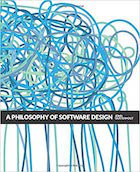
| From John Ousterhout, creator of the Tcl language | |
|
A Philosophy of Software Design |
A nice thing about most hotels in Santa Fe is that they treat water like you’re living on the Space Station. They have signs like, “You may have noticed that there’s not a lot of water around here. Please don’t waste it! Thank you, the management.”
At restaurants they usually only give you water if you ask for it, and I remember one time a waitress asked if I was really going to drink it or just look at it.
All of which reminds me of being at a hostel one time, where there was a sign that said, “Save water, shower together.” :)

If you’re interested in investing, this story, GPUs vs. TPUs: Can NVIDIA Hold On To Its Lead?, is a good read.
Dieter Rams Ten Design Principles: Recently I wrote about Jonathan Ive design interview quotes, and if you're familiar with industrial design and Apple design, you know you can't mention Jonathan Ive without also mentioning Dieter Rams, a world famous designer for Braun.
(If you don't know why I say that you can't think of Apple or Jonathan Ive without thinking of Dieter Rams, this Gizmodo article shows the amazing comparisons between Mr. Rams' designs and current Apple products.)
Dieter Rams 10 design principles (commandments)
So, to give Dieter Rams a little honor and credit -- both for his work at Braun and the evolution of his work at Apple — here are the famous "Dieter Rams 10 Design Principles":
- Good design is innovative
- Good design makes a product useful
- Good design is aesthetic
- Good design makes a product understandable
- Good design is unobtrusive
- Good design is honest
- Good design is long-lasting
- Good design is thorough down to the last detail
- Good design is environmentally friendly
- Good design is as little design as possible
wallpaper.com has a good story about Jonathan Ive and Apple’s new campus.
Here’s a story about a command-line app named speed-test that gives you network speed information from the command line.
Here’s an article from TechnologyReview.com titled, You could become an AI master before you know it. The story is about companies who are trying to make AI usable by non-AI experts.
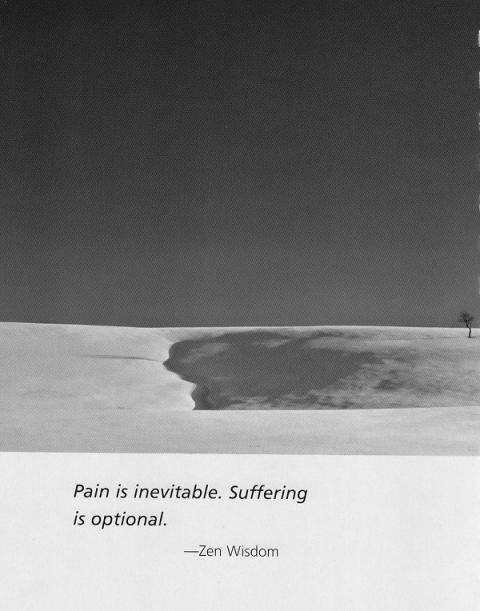
Zen Wisdom: “Pain is inevitable. Suffering is optional.”
When I saw this just now it reminded me of the quote, “In enlightenment, death has no relevance to one's state of being.”
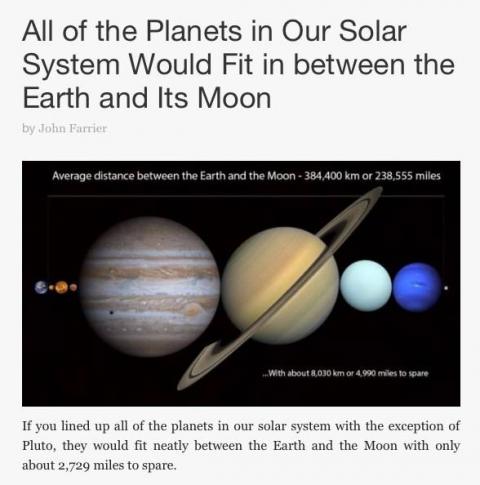
This is cool, though I don’t know why people are always picking on Pluto. (It may also need an asterisk stating that Saturn needs to be at an angle like that.)
I haven’t had time to watch it yet, but here’s Martin Odersky’s Devoxx talk that’s titled, Plain Functional Programming.
For the last few years, Intel CPUs have included a copy of the MINIX operating system way down in “Ring -3,” which apparently has support for networking and a web server. ZDnet has one of the more detailed stories about "MINIX Inside.”
From November 7, 2016: On the eve of the 2016 U.S. Presidential election, I thought I’d share these memories of the worst things that were said about Presidential candidates in years gone by:
1976: Jimmy Carter had a brother named Billy who apparently really liked beer.
1980: Ronald Reagan made some bad movies, and was the first President to have been divorced.
1988: Gary Hart was a front-runner until it was found out that he was having an affair with Donna Rice. Within a week he quit the race.
1988: Joe Biden plagiarized a speech, and quickly withdrew from the race.
1992: Bill Clinton was rumored to have had affairs, and he was the first major candidate to admit to smoking marijuana (though he apparently didn’t inhale).
1996: Bob Dole seemed really grumpy.
2000: George Bush was the first presidential candidate where I can remember thinking, “Um, he doesn’t seem very smart. Shouldn’t there be an IQ test for this position?”
(I would later come to think that there should be an “Enlightenment Test,” where Presidents have to think about “100 years from now” as much as they think about today.)
2008: John Edwards: affair, dropped out
I’m sure there’s more than that, but that’s all I can remember at the moment.
I’ve found this to be a good metaphor for practicing mindfulness 24 hours a day.
The actual practice is that whenever your mind wanders you gently bring your attention back to your breath. An important point is that just as you wouldn’t get angry at the spoon, you also don’t get angry at yourself for becoming less mindful; you just return your focus to your breathing.
(Sorry I don’t remember which book I saw this in at the moment.)
Stopped off to do a little bowling on the way to the grocery yesterday. I’m rolling the ball about 21-23 mph. Next to me, a little old man with an oxygen tank strapped onto his back is rolling maybe 10 mph, but with a really nice hook. He’d throw a few balls, then rest for a while, then throw a few more. We had some good conversations, but the best was about enjoying whatever time we have left.
~ November 2, 2013
Dr. Jill Carnahan of Louisville, Colorado, has a good article on mast cell activation syndrome (MCAS).
“The first principle is that you must not fool yourself — and you are the easiest person to fool.”
~ A quote from a 1974 Richard Feynman commencement address at Caltech entitled Cargo Cult Science.
Programmers can celebrate Christmas on Halloween:
31 oct = 25 dec
(3*8 + 1) == (2*10 + 5)
As I mentioned a few months ago, I made a small, one-time donation to The Guardian. I don’t read it regularly, but I find that other sources lead me to their articles from time to time, so I wanted to give them a little money. This morning I read that 300,000 other people have given The Guardian a one-time donation as well.
Apparently at some point Alan Kay said, “Lisp is the greatest single programming language ever designed,” and in this Quora post he writes about what he meant.
Some time ago I was searching for something and came across this Reddit thread about this tweet from Timothy Perrett, who leads Scala teams at Verizon:
“The fact that #scala Future is not lazy just blows my mind. After years of using Scalaz Task, Future is now totally unusable.”
The last part of that tweet is a bit of hyperbole to me, as I’ve been using the Scala Future for a long time myself, and I’ve had no problems using it. That being said, the examples at the top of the Reddit page were interesting, so I decided to try to understand the differences.
| From John Ousterhout, creator of the Tcl language | |
|
|
A Philosophy of Software Design |