Scala, Java, Unix, MacOS tutorials (page 172)

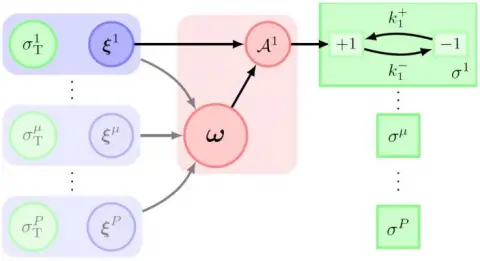
From a Phys.org article titled The thermodynamics of learning:

“The greatest significance of our work is that we bring the second law of thermodynamics to the analysis of neural networks,” Sebastian Goldt at the University of Stuttgart, Germany, told Phys.org. “The second law is a very powerful statement about which transformations are possible — and learning is just a transformation of a neural network at the expense of energy. This makes our results quite general and takes us one step towards understanding the ultimate limits of the efficiency of neural networks.”

The thermodynamics of learning

Last week I was wondering how mechanical watches work, and this morning Erik Bruchez shared this ‘animated infographic’ article on how they work.

How a mechanical watch works

From a Reuters article titled, Apple seeks design perfection at new “spaceship” campus:

“But de la Torre ultimately saw that Apple executives were not trying to evoke the iPhone per se, but rather following something akin to the Platonic ideal of form and dimension. ‘They have arrived at design principles somehow through many years of experimentation, and they are faithful to those principles,’ de la Torre said. Fanatical attention to detail is a key tenet.”

HP offers 157 “business” laptops. (I have no idea how many “personal” laptops they offer, I didn’t look.)

When I searched Dell for 15” laptops, their search results showed 167 models.

Apple has one. Maybe as many as four, depending on how you count.

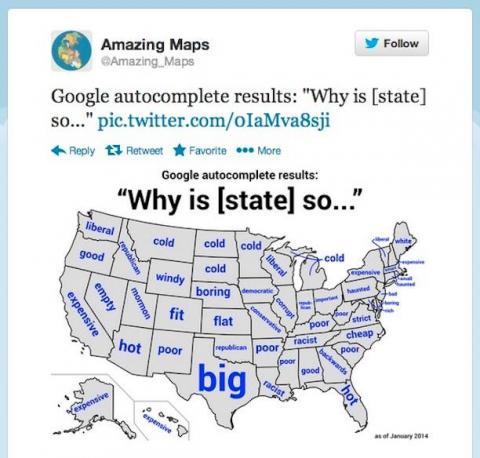
To create this graphic, someone Google’d all the queries for “Why is [state] so” (like, “Why is Illinois so”), and mapped the first Google auto-complete result onto each state. Makes me want to spend some time in the “haunted” states.

(They actually Google’d these queries in 2014. Makes me wonder what the current results look like.)

Why is state so (Google search results)

As a note to my future self: Take time to think!

*sigh*

Even at my advanced age, if I don’t think through an algorithm I can still waste an awful lot of time.

As an example I just started working on a complex algorithm for my Android football game based on the initial thoughts in my brain, and came to regret it. After recovering from that faux-pas I decided to write just a few simple notes like this to clarify my thoughts:

“It just tells you how tough this team is. Down 25 points, we just keep grinding and we finish on top again.”

~ Julian Edelman, New England Patriots

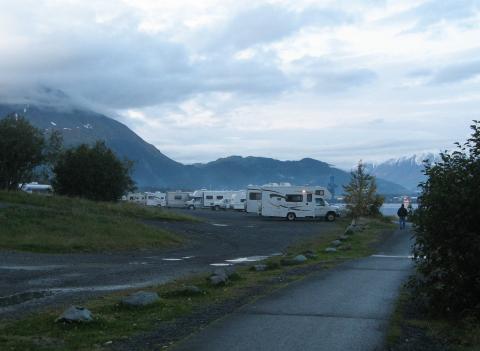
This is a photo of the RV campground in Seward, Alaska. Several people had small fires burning, and it was great to talk with the people there.

The RV campground in Seward, Alaska

If you need to iterate over the elements in a Map in Java 8, this source code shows how to do it:

Map<String, String> map = new HashMap<String, String>();
map.put("first_name", "Alvin");
map.put("last_name",  "Alexander");

// java 8
map.forEach((k,v)->System.out.println("key: " + k + ", value: " + v));

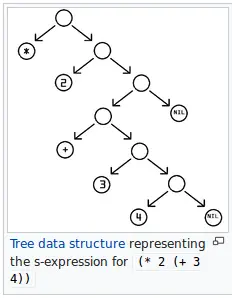
I spent some time last night reading the book, Practical Common Lisp. In all Lisp books you’ll read about S-expressions, but very few authors explain what they are. This image comes from this Wikipedia page, which states, “In computing, s-expressions (for “symbolic expression”) are a notation for nested list (tree-structured) data, invented for and popularized by the programming language Lisp, which uses them for source code as well as data. In the usual parenthesized syntax of Lisp, an s-expression is classically defined as a) an atom, or b) an expression of the form (x . y) where x and y are s-expressions.” See that link for more information about Lisp and S-expressions.

Lisp: What is an S-expression?

I’ve been interested in the Lisp programming language since I first learned about it, but in the books I’ve read about it, no author has explained the background of terms like cons, car, cdr, and S-expressions. Tonight I found this “History of Lisp” document, which explains the meaning of some of those names.

(If you’re really interested in those terms, this Wikipedia page describes them even more.)

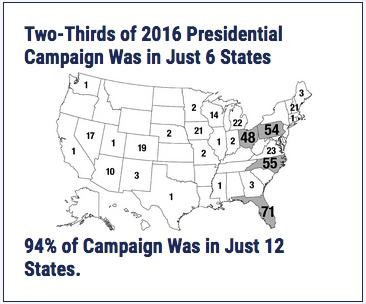
The National Popular Vote website proposes a way to keep the Electoral College but also elect our President based on the popular vote. From their website, “The U.S. Constitution (Article II, Section 1) gives the states exclusive control over awarding their electoral votes: ‘Each State shall appoint, in such Manner as the Legislature thereof may direct, a Number of Electors....’ The winner-take-all rule was used by only three states in 1789.” Their idea is that Electoral College voters will vote for whichever candidate wins the popular vote.

National Popular Vote

Louisville, Colorado’s Blue Parrot property has been purchased by investors based in Superior. Here’s the story on DailyCamera.com, a source of news for Boulder and Broomfield counties here in Colorado.

Louisville, Colorado's Blue Parrot property purchased

“Perhaps ninety-five percent of the suffering we endure every day is not at all necessary. Because of our lack of insight, we cause suffering to ourselves and others, including our beloved ones.”

~ Thich Nhat Hanh, in this article

“You’ve got to be real. Don’t be a phony. Find ‘you,’ who you are ... Say, ‘Here I am. Take me for what I am with all my frailties, all my stupidity, and so on. And if you can’t, leave me alone.’”

~ Leo Buscaglia in the book, Living, Loving, & Learning

Here’s a 2017 Budweiser Super Bowl ad titled, “Born the Hard Way”:

Marius Eriksen has a good article titled Hints for writing Unix tools. Some key points: a) consume input from stdin, produce output to stdout; b) output should be free from headers or other decoration; c) output should be simple to parse and compose. There’s much more to it than that, and it’s a good read (or reminder).

“I am lost in your fabulousness.”

A special shout out to the great humanitarians and citizens of Planet Earth.

Here’s yet another article that helps demonstrate that mindfulness meditation helps to reduce stress.

Mindfulness meditation reduces stress