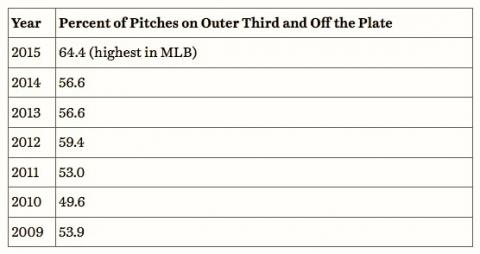
Grantland has a decent article on Zach Greinke’s recent success. Part of it seems to have to do with this chart, that shows he’s pitching outside more than ever.
Scala, Java, Unix, MacOS tutorials (page 231)
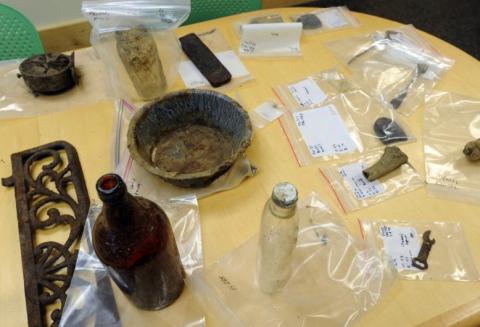
This story on adn.com describes an archaeological dig in my adopted hometown of Talkeetna, Alaska.
A short blurb from the article: “For the past two weeks, a half dozen Talkeetna-area high school students with the Youth Conservation Corps led by archaeologists from the University of Alaska Museum of the North have methodically excavated what’s believed to be part of the old Nagley homestead next to the Walter Harper Ranger Station just off Talkeetna’s main drag. The Nagleys, merchants who owned the local trading post that still bears their name, lived in the area from the 1920s into the 1930s.”
If you see this robot trying to hitch a ride in the USA, you might want to consider giving it a ride. Read the story here at Vimeo.
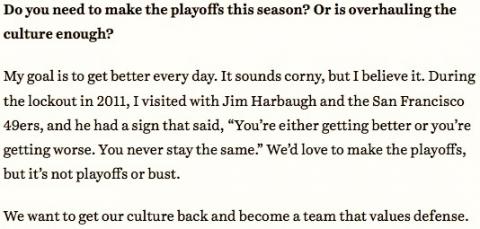
I hear these words a lot when I follow good coaches: “Get better every day.” This quote comes from new Denver Nuggets’ head coach Mike Malone. The full story is on Grantland.com.
For the sixth time in my life lightning struck within a block of where I was standing (or sitting, in one case). Always love those crackling and popping sounds afterwards, it reminds me of bacon being cooked.
This is some test code I wrote. It shows how to read a text file in Scala.
This first program shows how to read the entire file into memory and print out the “byte values” of each byte/character in the file:
designshack.net has this short article on minimalist design and typography, including the image shown. Interestingly, the Parcel website starts off with this great screen, but then gets very crowded.
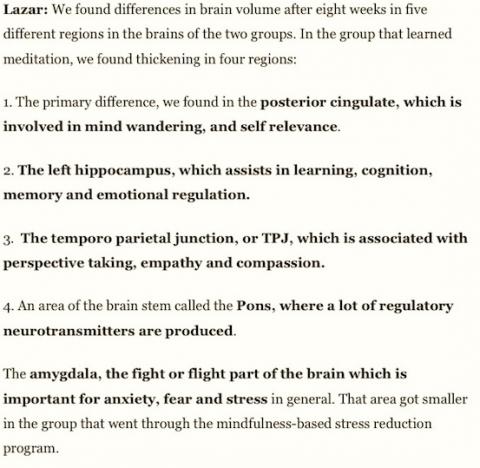
From the Washington Post, a Harvard neuroscientist reports that meditation changes your brain.
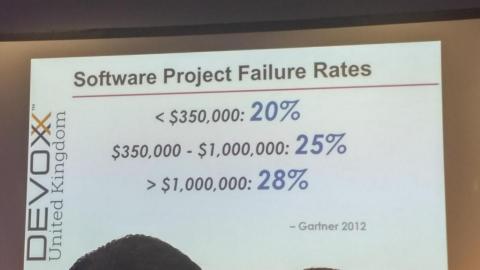
I thought “agile” processes would have had a big impact on software project failure rates, but according to Gartner, as of 2012 the failure rates for reasonably large projects is still very high. Image from this Twitter page.
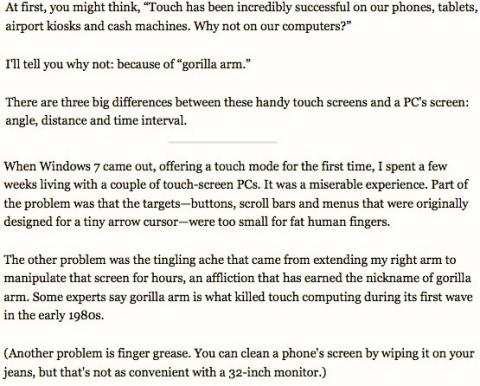
I just stumbled onto this old article about “gorilla arm.” The question that comes to mind is, “Why did Microsoft release touchscreen PCs if designers and testers were aware of these problems?” (Surely anyone who used a Touchscreen PC for any period of time would have known about this.) My guess is that the decision was driven by the sales/marketing team, not by designers and engineers.
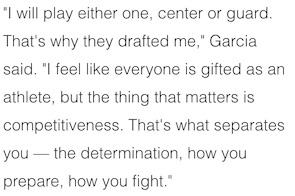
This is a quote about “competition” from a new player drafted by the Denver Broncos.
I like this because way back when I tried out for the baseball team at Texas A&M, I was on the field with somewhere around 50-100 other guys who were trying to “walk on” to the team. On the field, standing next to all of these other guys, there was nothing special about me for the coaches to notice. But once I stepped on the pitching mound to throw batting practice, none of them could hit me. I just kept throwing fastballs for strikes against batter after batter, and nobody hit anything against me except maybe an occasional weak grounder. The pitching mound was where I competed, and I felt like I had to get these guys out to take the next step. (I also had to only throw fastballs because it was supposed to be batting practice.)
I try to transfer the same attitude to work, but I will admit, it’s different. But when a client asks me to do something, I still think of it as competition. I want to do the best work I can because (a) they pay me a lot of money, and (b) I am competing hard so they will hire me for the next gig.
(Image from the Denver Post.)

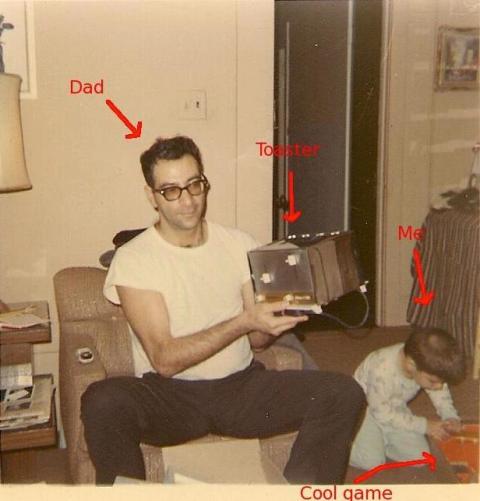
A friend always tells me I look like the Chicago Blackhawks’ Corey Crawford (or vice-versa). Yoga friends tell me I look like the Dalai Lama. Programmers say I look like Woz. Others say I look like Colin Powell. People at the Buddhist Geeks Conference always said, “You look familiar, how do I know you?” When I was bartending in college people always mixed me up with some other guy who lived in the “Rio Grande” area of Texas. What if we all look like different things to different people?
As a quick sed solution, if you get this “\1 not defined in the RE” error message when running a sed script:
$ sed -f sed.cmds c4.in.html > c4.out.html sed: 2: sed.cmds: \1 not defined in the RE
the problem probably isn’t too bad. For me I usually get the error message when I forget to “escape” parentheses that I use in my search pattern. I usually write this, which is an error:
s/foo(.*)bar/\1/
when I need to write that sed command like this:
FWIW, this is the source code for a sed script I use on my Mac OS X system to convert HTML output generated by MacDown into a format I need. MacDown generates some extra “cruft” that I don’t need, so I use these sed commands to clean up that HTML output: