


I can’t find the original source of this image and product, but I have always liked the “Live Brave” saying, which I first heard on the excellent Eli Stone tv series (which stars Johnny Lee Miller, who may be more well known for the movie Hackers and of course, Elementary).
Scala, Java, Unix, MacOS tutorials (page 11)
| The Bill Gates Bestseller | |
|
How to Avoid a Climate Disaster |
“What you allow is what will continue.”
(I found this at a url that is no longer available.)
Once upon a time, a black bear walked into the Breeze Inn in Seward, Alaska and was enjoying the view of the big glass windows ... but was encouraged to leave.

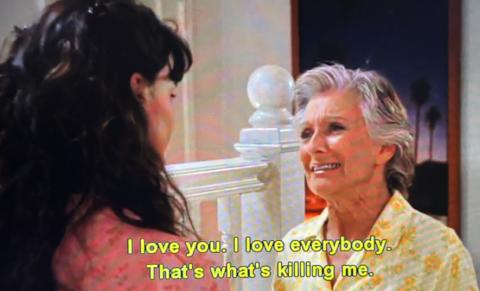
“I love everybody, that’s what’s killing me.” Cloris Leachman was outstanding in the movie Spanglish, and this is one of my favorite lines. I’ve written about this line and loving everyone from a Buddhist perspective before, and if you’ve ever loved two people and seen them fighting with each other, or loved two people and had to disappoint one person because of something related to the other person, that’s what this reminds me of.
In 2024, it also reminds me of war, and what a waste of life it is when people who are in charge ruthlessly kill other people.
“We are not human beings having a spiritual experience, we are spiritual beings having a human existence.”

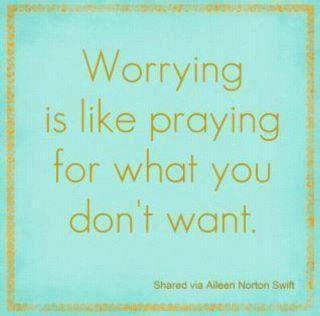
For the person in your life who constantly says, “I worry ...”
“It’s better to have a short life that is full of what you like doing, than a long life spent in a miserable way.” ~ Alan Watts

In a dream this morning
I’m pushing a little unpowered vacuum/sweeper
like you see them use at Denny’s
or maybe Cracker Barrel.
And then I look up
and see two young girls
and they’re singing a pretty song.
I ask what the song is
and they giggle a little,
and one asks the other
if they should tell me,
and she says yes.
So they tell me that there’s this
old abandoned house
and sometimes when they go by it
they see an old woman pushing
a sweeper like this.
Functional Programming FAQ: What are the benefits of an Effect System, like ZIO?
Answer
I’m currently planning a video on “The benefits of an Effect System in computer programming” on my free Scala and functional programming videos website, but in case I don’t get around to making that video, here are the slides I have put together.
Also, if you’d like to see a video that is somewhat similar, here’s my popular “What is ZIO 2?” video on YouTube.
Background
If you haven’t heard of Effects or an Effects System, I wrote about them a long time ago here. Also, in book, Effect-Oriented Programming, the authors describe them this way:
- Effects are the unpredictable parts of a system.
- Effect Systems partition the unpredictable parts, and manage them separately from the predictable ones.
In this fast-paced video I show what the ZIO 2 library is in the fastest way I know how. I show the benefits of effects and effect systems, and specifically how ZIO is the new “Functional Programming, Simplified.”

I did a “gratitude” meditation exercise two nights ago, and it ended up going almost four hours. (Fortunately for me, at advanced levels you can trade some meditation time for sleep.)
The technique is to put your mind in the area of your heart and express things you’re thankful for, including this crazy body I have, all of you, and in the end, basically everything.
If it helps you can start by feeling love for one being — such as Zeus — and work out from there.
A soul that temporarily has a body
At some point it really hits you that I’m some soul that’s pushing this vehicle that was named “Alvin” around, and YOU are also some other individual soul. So when YOU don’t do what I want, that’s okay, because you’re another student here in Earth School. Basically, MY soul needs to give YOUR soul that freedom to work your stuff out.
I noticed that the ZIO 2 ZIO.fromOption method returns Option[Nothing] as its error type, so I asked my friend Claude about it, and got the following response, which I have cleaned up a little.
A woman in a dream this morning was quite distraught and spoke only Spanish. I tried communicating by speaking very slowly (“Why .. are .. you .. here?”, “You're .. in .. the .. wrong .. dream”), but that didn’t help at all.
(A dream from September 22, 2013)
Scala FAQ: What is the Nothing type in Scala, and how do I use it?
Solution
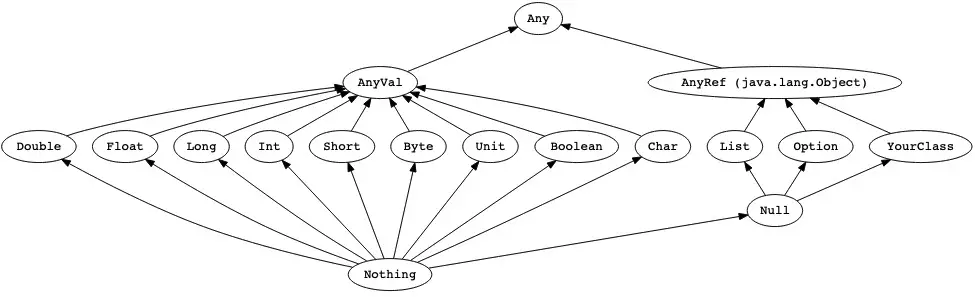
In Scala, the Nothing type is called a bottom type, which means it is a sub-type of every other type in the Scala type system. It is also specifically a data type that has no instances.
In practical use, Nothing is used to indicate that a computation or function will never produce a result normally, either because it throws an exception, enters an infinite loop, or encounters some other abnormal termination.
Visually, this is what the Nothing type looks like in the Scala type hierarchy (image courtesy of this scala-lang.org page):
Scala: Common uses of Nothing
Some common use cases of Nothing in Scala include:
If you’ve ever seen the “Maine Cabin Masters” tv show, you may have seen the black flag that they fly on their cabins while they’re working on them. If you ever wondered about their black flag, here’s what I can tell you from this deleted scene video:
- In the video, which was posted on March 19, 2020, Ryan states that the flag is new.
- The flag signifies the Maine Cabin Masters “are here” and “we’re kicking butt on this project, and it’s going to be the best this camp will ever be.”
- It is the Maine Cabin Masters “skull and crossbones.”
- The image is a Chase Morrill design.
As I work more with ZIO 2, I also find myself thinking a lot about the ZIO 2 mental model, by which I partially mean “a way of thinking about your code” and also “ZIO 2 best practices.”
Here are my initial notes. Also, I hope that most of this code is mine, but several snippets are from other sources that I don’t remember, including the official ZIO 2 docs.
I recently watched the movie, The Ten Commandments, and when I saw Sephora, I thought, “She looks familiar.”
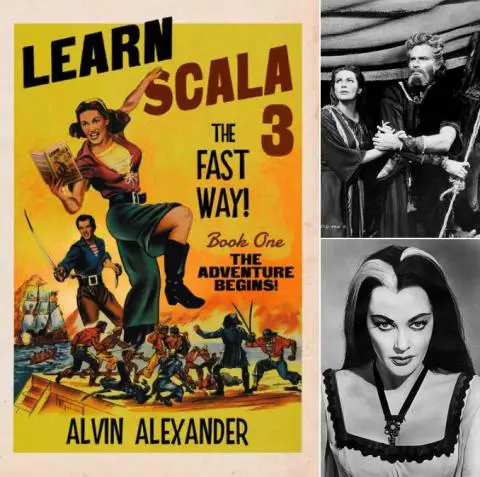
It turns out she’s played by Yvonne De Carlo. She’s the actress who’s portrayed on my Learn Scala 3 book cover, which is based on the 1950 movie, Buccaneer’s Girl, which she starred in. (Until this, I thought I only knew her as Lily Munster on The Munsters.)
And if you like the movie The Ten Commandments, I also wrote this blog post about The Ten Commandments and the 2024 Presidential Election.
“Always kiss me goodnight. Always kiss me goodmorning, too.”
~ as seen in a house in Florida

“The whole essence of Zen consists in walking along the razor’s edge of Now.”
I know that I may never get to any “final” stages of enlightenment, but IMHO and as near as I can tell from my current meditation practice level, the last steps leading up to enlightenment/awakening/liberation are:
| The Bill Gates Bestseller | |
|
|
How to Avoid a Climate Disaster |