


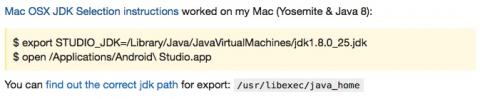
After doing a little research, it looks like the creators of Android Studio made a quirky decision to want to enforce the use of Java 6 on Mac OS X platforms, presumably to have better font rendering. They did this by putting 1.6* in their Info.plist file instead of 1.6+ (and they’ve done this in more than one version of Android Studio. This image (from this link) shows the suggested way to fix the problem, but you can also edit the Info.plist file to solve the problem.
Scala, Java, Unix, MacOS tutorials (page 253)
| A Programming Classic! | |
|
Design Patterns |
From this article, here is a list of the best fonts to use for readability and comprehension in printed documents.

Who believes Bill Belichick and Tom Brady about deflategate? Apparently only people who live in New England.

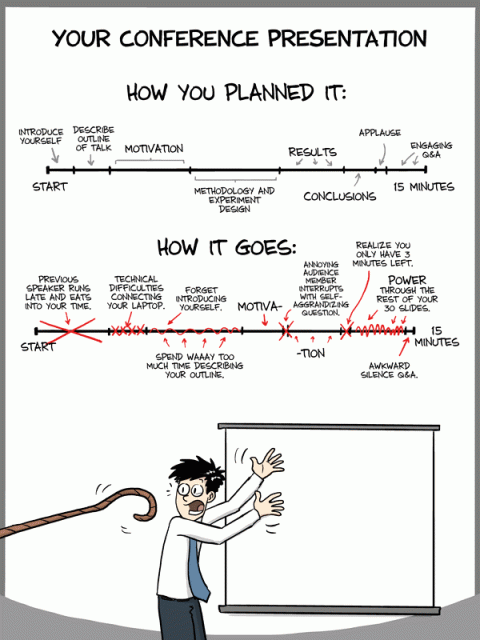
Your conference presentation - How you plan it, how it goes. From PhD Comics.
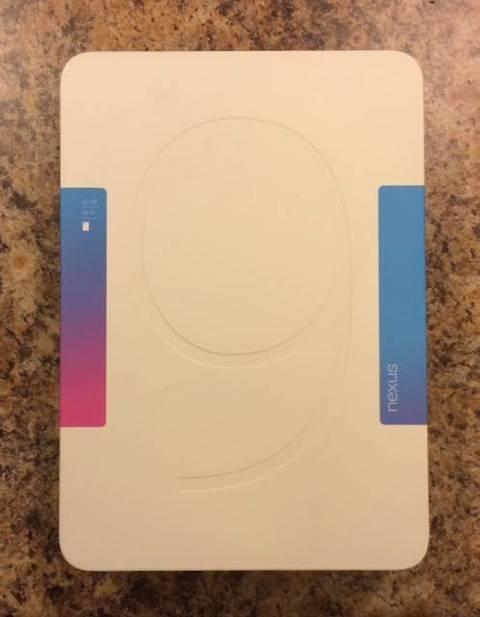
My old iPad 2 was, well, old, and it’s slow speed was driving me crazy. So I decided to buy a new tablet, but when I made that decision I also decided to look around, and in short, I eventually decided to buy a Google Nexus 9. After a few days with it, here’s my review of the Nexus 9.
The Nexus 9 unboxing experience
The Nexus 9 unboxing experience was a non-experience. The Nexus 9 comes in a simple, unattractive box, and there’s nothing special about any part of the unboxing experience.
[toc hidden:1]
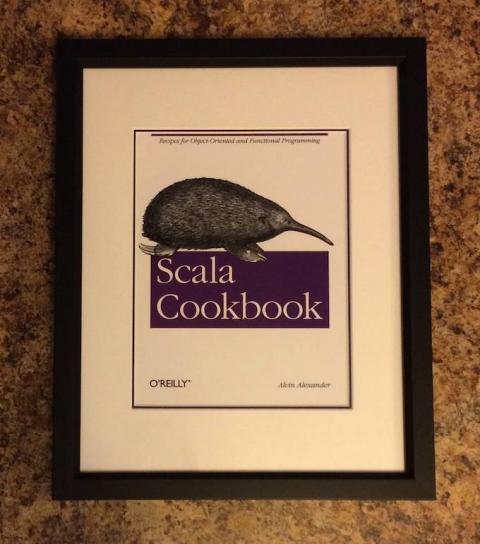
When I returned to Colorado after five weeks of traveling I found this nice gift from the folks at O’Reilly, a Scala Cookbook cover in a nice frame. :)
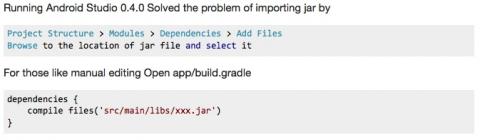
I just started using Android Studio 1.x and quickly ran into a problem where I needed to use a Jar file in my Android project. In short, this image shows the steps I followed to import the Jar file into my project. As an important note, I put the Jar file I needed in an app/libs folder, which I created in my project. As the image shows, this affects your Gradle build configuration. (I found this info at this SO link.)
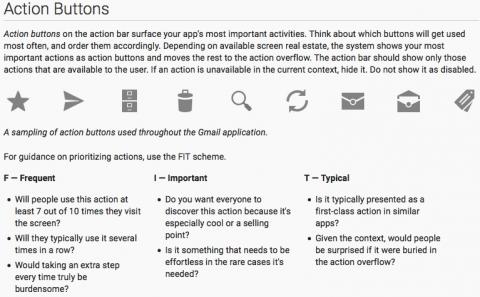
I like this “FIT Scheme” section in the Android documentation. It’s clear and helpful, and provides a nice guideline for when elements should be included in the Android Action Bar.
One of my nieces had a homework problem where she had to graph the x and y values of this cotangent equation:
y = 3 * cotangent(4 * x)
I couldn’t remember how to graph things like that just by looking at the equation, so I wrote this Scala “cotangent” program:

“Husbands choosing paint colors must have a note from their wives.” Funny, and probably a very good idea.

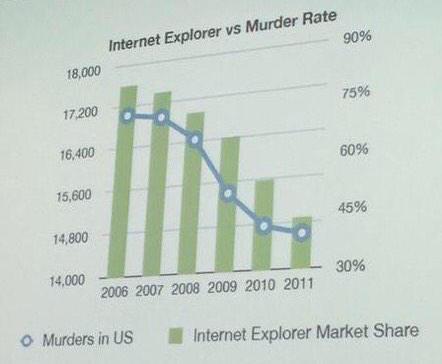
In the amazing world of statistics, Internet Explorer market share correlates extremely well to murder rate. Image from this Twitter link.
Because of personal reasons I have a fair amount of free time at the moment, so I started converting some algorithms in the book, Programming Collective Intelligence, from Python to Scala.
As a quick note today, this is the source code for a Raspberry Pi (RPI) camera module shell script that I created so a friend can turn her Raspberry Pi camera on and off from the RPI command line (Linux command line):
As a quick Scala fold/reduce example, I just needed to write a “sum of the squares” algorithm for a “Pearson Correlation” function I’m working on, and initially wrote it like this using map and sum:
val sumOfTheSquares = movieRatingsMap.values
                                     .map(rating => Math.pow(rating, 2))
                                     .sum
If you know Scala, and know that movieRatingsMap is a Map of movies and my ratings of those movies, I think that line of code is fairly easy to read. That line can also be written like this:
Scala FAQ: How do I sort the elements in an Array in Scala?
Solution: If you’re working with an Array that holds elements that have an implicit Ordering, you can sort the Array in place using the scala.util.Sorting.quickSort method. For example, because the String class has an implicit Ordering, it can be used with quickSort:
| A Programming Classic! | |
|
|
Design Patterns |