


My new favorite thing about the fall season: Celestial Seasonings Sweet Harvest Pumpkin tea. We discovered it on a Celestial Seasonings tour last fall, and it is really good.
Scala, Java, Unix, MacOS tutorials (page 301)
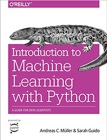
| A Machine Learning Bestseller | |
|
Introduction to Machine Learning with Python |
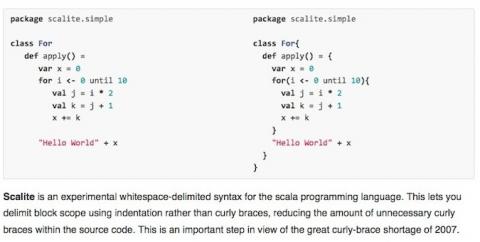
What might Scala look like if it used indentation rather than curly braces in most places? Enter a Github project named Scalite.
I’d be interested to see more of this. I’d also like to see the <- symbol changed to in:
for (i in 0 until 10)
    val j = i * 2
    val k = j + 1
    x += k
The Preface was the last chapter I wrote in the Scala Cookbook. Initially I didn’t plan to write a Preface for the book, but I was more or less told by my editor that it was mandatory. So I waited until I finished the rest of the book before starting on it. To me that made sense; I couldn’t write a decent Preface without knowing the final contents of the book.
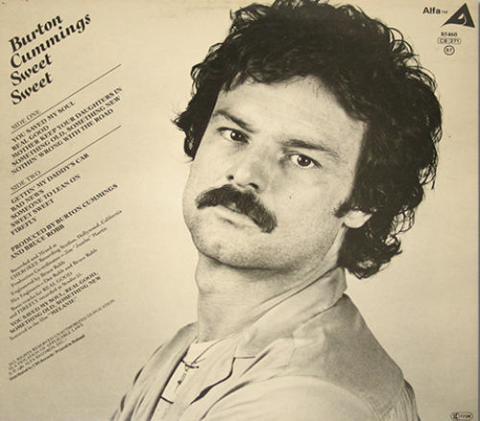
Is that Nacho Libre? Surprisingly no; it’s his doppelganger, Burton Cummings, lead singer for The Guess Who (an appropriate name).
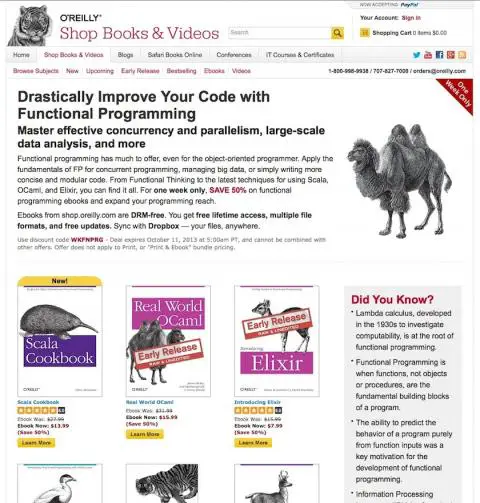
Save 50% on “key” O’Reilly Functional Programming ebooks, including the Scala Cookbook: http://kbhr.co/keyfp
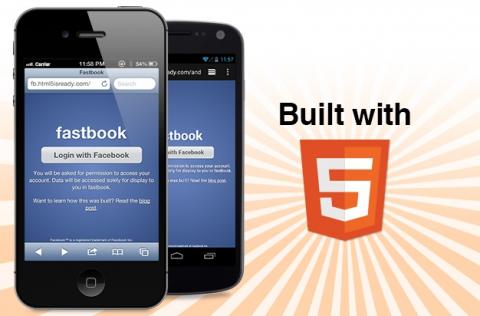
“When Mark Zuckerberg said HTML5 wasn’t ready, we took a little offense to the comment ... We thought to ourselves: HTML5 can’t really be the reason that Facebook’s mobile application was slow ... We had our suspicions about why Facebook’s mobile application team had problems, because it matched a common pattern.”
This story includes a nice four-minute demo that shows Sencha Touch and HTML5 are as fast or faster than native iOS and Android apps: http://kbhr.co/fastbk
This looks like the curveball grip by Travis Wood of the Chicago Cubs. I used this for a while myself. By getting your index finger out of the way, it feels like you can get more spin on the baseball. I learned the grip when Mike Krukow of the Cubs (and later the Giants) used it. (Note: There’s a slight chance he throws his slider or cutter with this grip.)

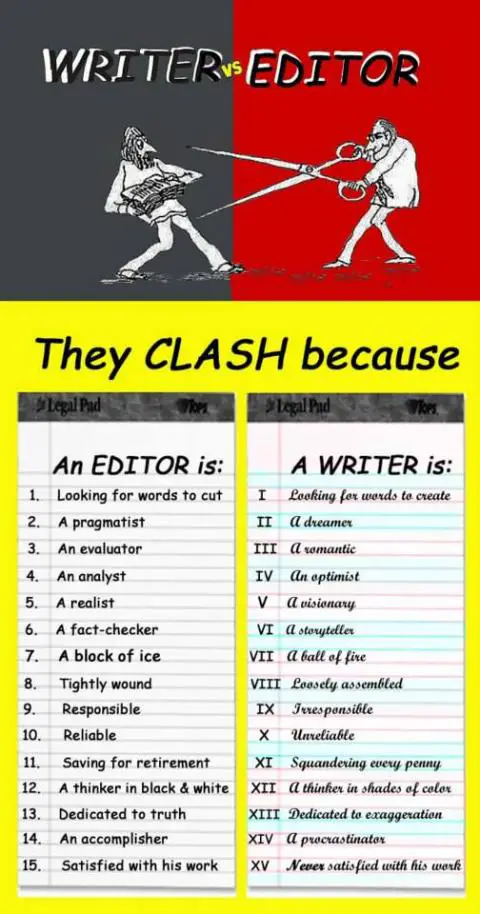
A friend shared this photo on Facebook. I’m sorry I don’t know the original source of it, but based on my experience I agree with it. I know that my only concern was about the quality of the Scala Cookbook, while from my perpective, my editors mostly seemed interested in getting the book into production.
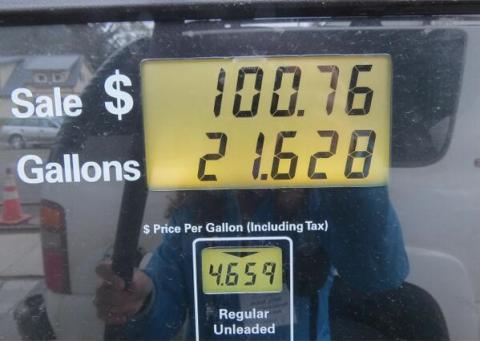
Gas prices in Haines, Alaska, September, 2013. Courtesy of Nancy DeWitt.
Why does the stock market hate Apple? Check out these numbers, where P/E means “price to earnings”, and EPS means “earnings per share”. When a P/E ratio is high, it means Wall Street loves you for one reason or another, and when EPS is high, it means you’re making a lot of money (or at least a lot of money per share):
            P/E    EPS
           -----  -----
Google      25.6   34.6
Dell        18.0    0.8
Microsoft   13.0    2.6
Apple       12.1   40.1
Amazon       NaN   -0.2   # "p/e" is NaN because eps is negative
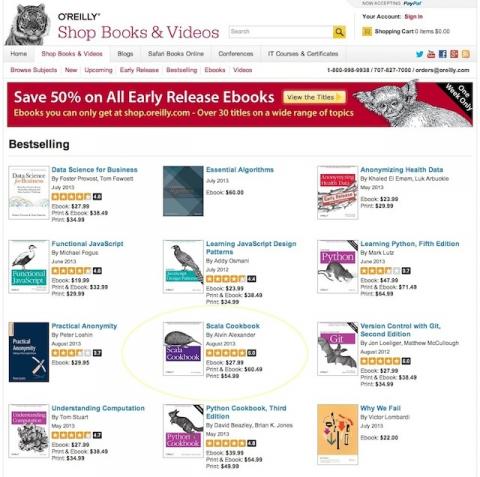
I’m proud to say that the Scala Cookbook is on O’Reilly’s bestselling list. While I hope that some of this is due to my work to “simplify, simplify, simplify,” I also know that it’s a reflection of (a) Scala being an awesome programming language, and (b) having some good reviewers kick me in the butt when I needed it. My “dream goal” when writing the Cookbook was that it would help make Scala more accessible to Java developers, so this gives me some hope that it can succeed in that mission.
| A Machine Learning Bestseller | |
|
|
Introduction to Machine Learning with Python |