


Mac "file copy" FAQ: How do I copy files on my Mac?
When people move from Windows to Mac OS X, a common question is "How do I copy files on my Mac?" I hope this short Mac file copying tutorial will help answer that question.
| New York Times Bestseller! | |

|
TED Talks: The Official Guide |
Mac "file copy" FAQ: How do I copy files on my Mac?
When people move from Windows to Mac OS X, a common question is "How do I copy files on my Mac?" I hope this short Mac file copying tutorial will help answer that question.
iTunes song volume FAQ - How do I equalize (normalize) iTunes song volume, that is, change the volume of iTunes songs so their peak volume is more or less the same?
Solution: One thing that drives me nuts is when one song is playing in iTunes, and the song volume is just fine, and then the next song is either too loud or too quiet. I find that I'm always fiddling with the volume control, and that's annoying.
Drupal FAQ - How do I place a block above (before) the comments section (i.e., after the content body, but before the Comments section)?
UPDATE: This article was written for Drupal 6. I just wrote a new version of this, How to place a Block and a View above the Comments and below the Content for Drupal 8.
Just a quick note that over the last few days I finished a major re-work of my old Java and Object Oriented Programming (OOP) training material. I used variations of this Java/OOP training material with several classes I taught from 1998 through about 2005.
I still need to make a few more changes to improve the material, but this big change involved reformatting the training material (courseware) into much longer pages that are easier to read, and improving the appearance of the pages.
Free UML software tools FAQ: Can you recommend any free UML tools?
Over the last week or so I've been looking around again at free UML tools, and one that has really stood out is UMLet. While most UML tools try to do a lot of things, UMLet takes the "UML as sketch" approach, which I've generally come to agree with.
Unix/Linux shell script FAQ: Can you share a simple Linux shell script that shows how to count, i.e., a shell script that increments a counter in a for loop or while loop?
Sure, I just needed to increment a while loop counter myself, so I thought I'd share my example shell script code here.
I was just reminded of the Unix/Linux vimdiff command that lets you visually see the differences between multiple files. I normally just use vimdiff to look at the differences between two files, but I know it can also work with three files.
To demonstrate how vimdiff works, here's a quick example. Suppose you have one file named getty1 that has these contents:
Mac Git installation FAQ: How do I install Git on Mac OS X?
There are at least two different ways to install Git on Mac OS X systems, and I've used both of these methods. The first approach is to use a Mac GUI installer, and the second is to use the command-line MacPorts project to install Git on Mac OS X.
Java File I/O FAQ: How do I create a Java temporary file? Also, after I create a temporary file, when is it deleted?
I just ran into this question on the Mac/Java mailing list, so I thought I'd write a quick "Java temporary file" test to explore this. Here are the results.
Git help FAQ: How do I Git help?
Sorry for that title, but I used to live in several southern states in the United States, and people there often pronounce "get" like "git". (I hope they'll take this joke well, lol.)
If you need to see the Git help text, you can start by using the "git help" command, like this:
git help
This command displays the following output:
Thesis: Apple is willing to ship an incomplete product when entering a new market, such as with the new Apple iPad design. Because they are entering a nascent market, this has the effect of generating more revenue from the product line. This has been demonstrated repeatedly by Apple (when led by Steve Jobs), first with the original Macintosh, and then the iPod, iPhone, and now the iPad. By shipping incomplete products initially, Apple gives "early adopters" and affluent buyers compelling reasons to upgrade when new product versions are produced.
If you happen to be looking for a collection of Unix "file management" commands, look no further than the Unix/Linux file management page of my "Introduction to Unix" tutorial.
I took some time yesterday and reformatted my free example software requirements specification, whittling it down to 36 pages, from the original release, which was over 200 pages. As you might guess, the new pages are longer, and I've also reformatted the specification, both of which help to make it much easier to read.
After having this on my "wish list" for many years, I finally took the time tonight to regenerate the pages for my "Free Introduction to Unix and Linux tutorial". The old format was just horrible, spread out among 285 small pages, and while this one still needs some work, it's about 1,000 times better than the old format, and comes in weighing only 13 large tutorial pages.
Some of the tutorial material is a little dated now, but these sections are still very relevant to today's Unix/Linux world:
If you ever need to use the Unix/Linux sed command to insert text before or after a line of text in an existing file, here's how I just ran several sed commands to update my old Function Point Analysis tutorial to have a format that doesn't look like it was created in the 1990s.
This tutorial consists of over 40 files, and I had eight changes I wanted to make each file. So I had two choices: modify each file by hand over the next six hours, or run a series of sed commands and be done in 30 minutes. (I chose the sed commands.)
After constantly restarting Firefox on Mac OS X due to memory leaks, I've finally given up, and switched to Google's Chrome browser. All day today I've been doing all the things I normally do, just using Chrome instead of Firefox, and Chrome is currently using 135 MB RAM, where Firefox would typically be over 600 MB RAM, and I probably would have restarted it once already by now.
Drupal update/upgrade FAQ: Help, I can’t login to my Drupal website after performing a Drupal upgrade!
(Okay, that’s not really a question. But it is a common Drupal problem that might make you panic.)
If you ever happen to upgrade a Drupal website, and then find that after the upgrade you can’t login to your Drupal site, don’t panic, I may have an answer for you.
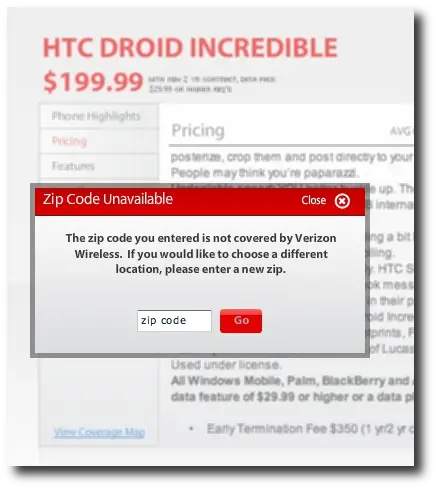
If you live in Alaska, and you want to use a smartphone, you better be going with AT&T, because for all their commercials, Verizon and Sprint won't do you any good here. Here's the beatdown from Verizon Wireless when you tell them you live in Alaska:
UML Use Case FAQ: Can you share an example of a Use Case diagram?
As I've been preparing to let other writers write on the devdaily.com website, I started to think about what different things (processes) an author would need to do on the website. As I thought about this, I started realizing that I was once again thinking like a business analyst, and then I thought I'd create an example UML Use Case diagram to show these processes.
Linux FAQ: How do I create a symbolic link in Linux?
Answer: To create a symbolic link in Linux, just use the Linux ln command, like this:
ln -s OriginalFile NewSymbolicFile
As you can see from my filenames, when using the Linux ln command, you specify the name of the file you're linking to first, and then supply the name of the link second.
| New York Times Bestseller! | |
|
|
TED Talks: The Official Guide |